
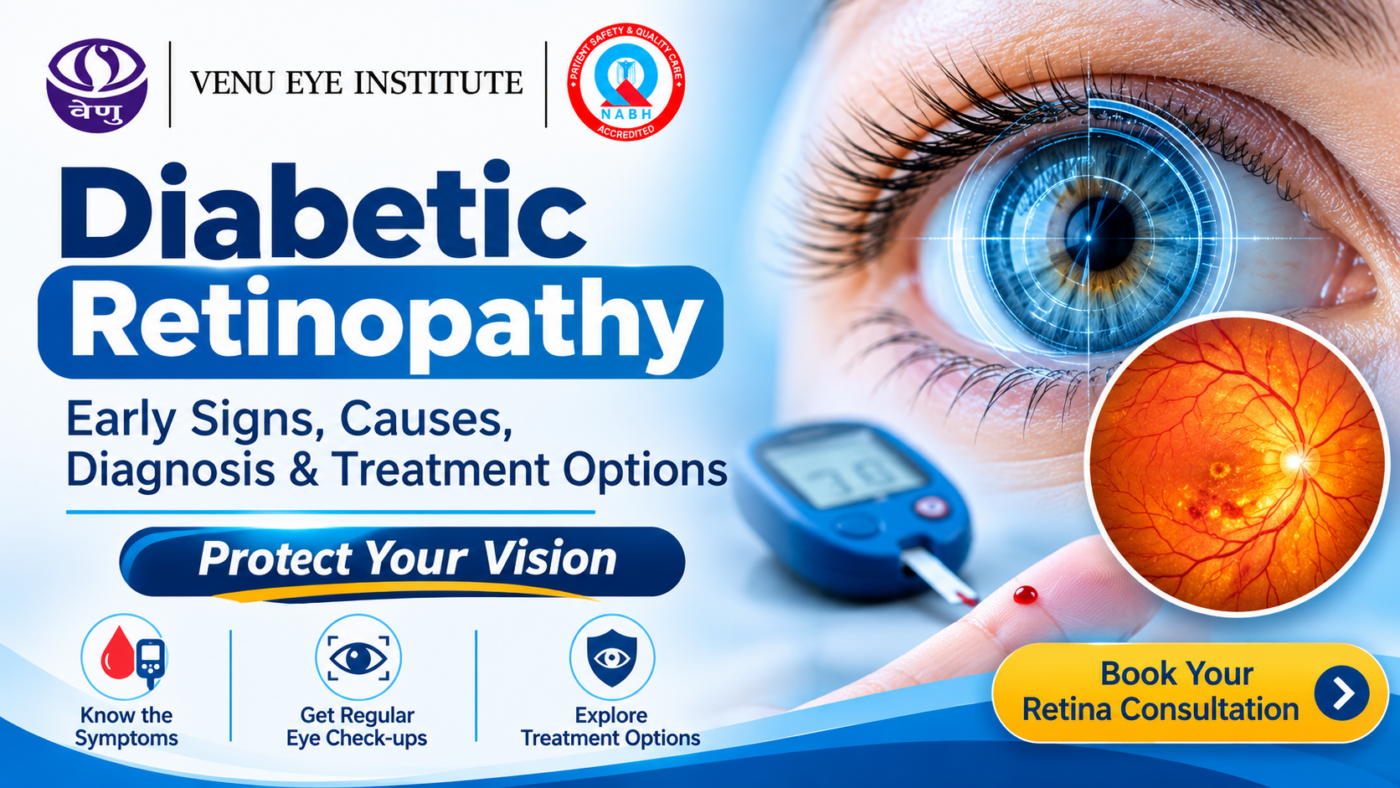
Diabetes can affect more than just blood sugar levels. Over time, high blood glucose can damage the small blood vessels in the retina, the light-sensitive layer at the back of the eye. This condition is known as diabetic retinopathy and can gradually affect vision if it is not detected and managed appropriately.
One of the major concerns with diabetic retinopathy is that it may develop without noticeable symptoms during its early stages. Regular eye examinations and timely evaluation by an eye specialist are important for identifying changes before significant vision problems occur.
At Venu Eye Institute, patients can access specialised retina care, diagnostic evaluation and treatment guidance for various retinal conditions, including diabetic retinopathy.
What Is Diabetic Retinopathy?
Diabetic retinopathy is an eye condition caused by damage to the tiny blood vessels supplying the retina due to prolonged high blood glucose levels.
The retina plays an essential role in vision by converting light into signals that are transmitted to the brain. When diabetes damages its blood vessels, they may leak fluid, become blocked or develop abnormal new vessels.
Depending on the severity, diabetic retinopathy can cause blurred vision, retinal swelling, bleeding inside the eye and, in advanced cases, permanent vision loss.
Common Symptoms of Diabetic Retinopathy
Diabetic retinopathy does not always produce symptoms in its early stages. However, as the condition progresses, patients may experience:
- Blurred or fluctuating vision
- Difficulty reading or focusing
- Dark spots or floating particles in vision
- Difficulty seeing clearly at night
- Dark or empty areas in the field of vision
- Sudden changes in eyesight
- Reduced or distorted central vision
It is important not to wait for symptoms before scheduling an eye examination. Retinal damage may already be developing even when eyesight appears normal.
What Causes Diabetic Retinopathy?
The primary cause of diabetic retinopathy is prolonged exposure to elevated blood glucose levels, which can damage the small blood vessels in the retina.
Several factors may increase the risk of developing or progressing diabetic eye disease:
- Poorly controlled blood sugar levels
- Long duration of diabetes
- High blood pressure
- Elevated cholesterol levels
- Pregnancy in women with pre-existing diabetes
- Inconsistent diabetes management and eye examinations
Managing diabetes and associated health conditions, along with regular retinal assessments, plays an important role in protecting long-term eye health.
Stages of Diabetic Retinopathy
Diabetic retinopathy generally develops in two main stages.
- Non-Proliferative Diabetic Retinopathy (NPDR)
This is the earlier stage of the condition. Small retinal blood vessels may become weak, swollen or damaged, resulting in tiny haemorrhages and fluid leakage.
Many patients do not experience noticeable vision changes during this stage. Regular monitoring helps the eye specialist assess whether the condition is progressing.
- Proliferative Diabetic Retinopathy (PDR)
This is an advanced stage in which abnormal new blood vessels develop on the retina.
These vessels are fragile and can bleed into the vitreous, the gel-like substance inside the eye. Scar tissue may also develop, potentially causing retinal detachment and serious vision complications.
Early specialist evaluation is important to determine the appropriate management approach.
How Is Diabetic Retinopathy Diagnosed?
A comprehensive retinal examination helps identify diabetic eye changes and assess their severity.
Depending on the patient’s condition, an ophthalmologist or retina specialist may recommend:
- Dilated Fundus Examination
Eye drops are used to widen the pupils, allowing the specialist to examine the retina and identify abnormal blood vessels, bleeding or other retinal changes.
- Optical Coherence Tomography (OCT)
OCT is a non-invasive imaging investigation that provides detailed cross-sectional images of the retina. It helps identify retinal swelling and changes affecting the macula.
- Fundus Imaging
Retinal photographs help document retinal changes and support monitoring over time.
- Fluorescein Angiography
When clinically indicated, this investigation helps assess blood flow and identify leakage or abnormal blood vessels in the retina.
The required investigations depend on the patient’s symptoms and clinical findings.
Treatment Options for Diabetic Retinopathy
Treatment depends on the stage of diabetic retinopathy, the presence of retinal swelling and the overall condition of the eye.
Available treatment approaches may include:
- Regular Monitoring
In some early cases, immediate treatment may not be required. The specialist may recommend regular retinal examinations to monitor changes and determine whether intervention becomes necessary.
- Intravitreal Injections
Certain medications can be injected into the eye to manage abnormal blood vessel growth and retinal swelling, particularly in diabetic macular oedema and selected cases of proliferative diabetic retinopathy.
- Retinal Laser Treatment
Laser photocoagulation may be recommended for specific retinal complications. The treatment aims to reduce the risk of further vision damage by targeting affected retinal areas.
- Vitrectomy Surgery
In advanced cases involving significant bleeding or traction from scar tissue, a surgical procedure called vitrectomy may be considered.
The most appropriate treatment is determined following a detailed examination by a retina specialist.
How Can People with Diabetes Protect Their Eyes?
Taking care of your overall health can help reduce the risk of diabetic eye complications.
Consider these important steps:
- Keep blood glucose levels within the target range advised by your doctor.
- Monitor blood pressure and cholesterol.
- Attend regular comprehensive eye examinations.
- Follow prescribed diabetes medication and treatment plans.
- Avoid smoking.
- Consult an eye specialist if you notice any changes in vision.
- Follow the recommended retinal monitoring schedule.
People with diabetes should have regular comprehensive dilated eye examinations to monitor retinal health. At Venu Eye Institute, we suggest that people with diabetes schedule a dilated fundus examination twice a year (every six months). The appropriate frequency may vary depending on retinal findings, diabetes control and the ophthalmologist’s advice.
Why Choose Venu Eye Institute for Retina Care?
Venu Eye Institute is committed to providing accessible and comprehensive eye care through specialised ophthalmic services and patient-focused treatment guidance.
The institute’s retina services include the evaluation and management of several retinal conditions, such as:
- Diabetic retinopathy
- Age-related macular degeneration
- Retinal detachment
- Macular holes
- Epiretinal membranes
- Vitreous haemorrhages
The retina department offers diagnostic facilities including Optical Coherence Tomography (OCT), digital retinal imaging and fluorescein angiography.
Depending on the clinical findings, available treatment approaches include retinal laser procedures, intravitreal injections and vitreoretinal surgeries.
Patients receive guidance based on their individual eye condition and treatment requirements.
When Should You Consult a Retina Specialist?
If you have diabetes, do not wait until your eyesight becomes noticeably affected before seeking an eye examination.
Consult an eye specialist if you experience blurred vision, floaters, dark spots or difficulty seeing clearly.
Sudden vision loss, a sudden increase in floaters, flashes of light or a curtain-like shadow across your vision requires urgent medical evaluation.
Timely diagnosis and appropriate treatment can help manage diabetic retinal complications and protect your remaining vision.
Book a Retina Consultation at Venu Eye Institute
Your vision deserves attention at every stage of life. If you have diabetes or are experiencing vision changes, a comprehensive eye examination can help identify potential retinal problems.
Connect with Venu Eye Institute to enquire about retina consultations, diagnostic investigations and available treatment options.
Venu Eye Institute
Address: 1/31, Sheikh Sarai Institutional Area-II, South Delhi, India
Phone: +91 70650 60265
Email: info@venueyeinstitute.org
Website: https://venueyeinstitute.org/
Take the next step towards protecting your vision. Book your eye consultation today.
Frequently Asked Questions About Diabetic Retinopathy
-
What are the early symptoms of diabetic retinopathy?
Early diabetic retinopathy often has no noticeable symptoms. As the condition progresses, blurred vision, floaters, dark spots and difficulty seeing clearly may develop.
-
Can diabetic retinopathy cause permanent vision loss?
Yes. Advanced diabetic retinopathy can lead to serious complications and permanent vision loss. Early diagnosis and appropriate treatment can help reduce the risk of further damage.
-
How often should people with diabetes get an eye examination?
At Venu Eye Institute, we suggest that people with diabetes have a dilated fundus examination twice a year (every six months). Patients with existing retinal changes or other risk factors may need a different or more frequent schedule, as advised by their ophthalmologist.
-
Which tests are used to diagnose diabetic retinopathy?
Diagnosis may involve a dilated fundus examination, OCT, retinal imaging and fluorescein angiography, depending on the clinical findings.
-
Can diabetic retinopathy be treated?
Yes. Depending on its severity, treatment may include regular monitoring, intravitreal injections, retinal laser treatment or vitrectomy surgery.
-
Does controlling blood sugar help protect eyesight?
Maintaining blood glucose, blood pressure and cholesterol within the targets advised by your healthcare team can help reduce the risk of diabetic eye complications.
-
When should I visit a retina specialist?
People with diabetes should schedule regular retinal examinations. Sudden vision changes, flashes, a sudden increase in floaters or sudden vision loss require urgent assessment.
Medical Disclaimer: This article is intended for general educational purposes only. It does not replace professional medical advice, diagnosis or treatment. Treatment decisions should always be made by a qualified ophthalmologist after an individual examination.
